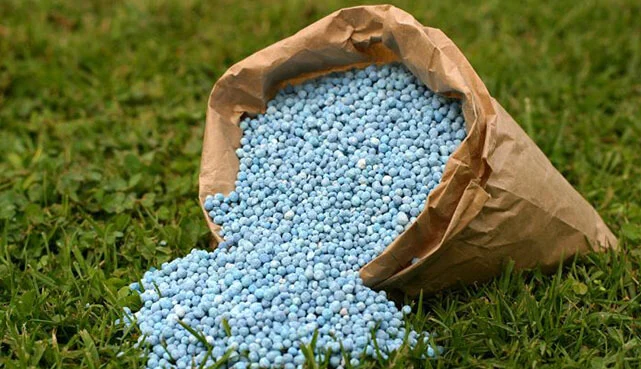
Fertigation — delivering nutrients through the irrigation system — gives a level of control that broadcast fertilizer cannot approach. You decide what the crop gets, in what ratio, at which growth stage, and you can change it next week if the crop tells you to.
That control comes with a requirement: you have to know what you are putting in. This guide works through building a nutrient solution in the order the decisions actually need to be made.
Step 1: Get a water analysis. Everything else depends on it.
Irrigation water is not a neutral carrier. It already contains nutrients, and it already contains things that will interfere with what you add. Designing a nutrient solution without a water analysis is guessing.
Ask the laboratory for:
- pH — the starting point, though less important than alkalinity
- EC — total dissolved salts already present
- Bicarbonate (HCO₃⁻) — the figure that determines how much acid you need. This matters more than pH.
- Calcium, magnesium, sulphate — often present in useful quantities; subtract them from what you add
- Sodium and chloride — not nutrients here; they occupy EC headroom and can damage sensitive crops
- Nitrate, potassium, phosphate — occasionally present, particularly in borehole water
- Iron, manganese, boron — boron in particular can be high enough in some groundwater to be a toxicity risk
Two practical points. First, alkalinity matters more than pH: water at pH 7.2 with low bicarbonate is easy to manage, water at pH 7.2 with high bicarbonate is not. Second, retest at least annually, and after any change in source. Borehole chemistry drifts.
Step 2: Decide the target concentrations
Work in milligrams per litre (ppm) of each element in the delivered solution. A general orientation for a fruiting vegetable crop under protection:
| Element | Typical range (mg/L) | Notes |
|---|---|---|
| Nitrogen (N) | 120–200 | Mostly nitrate; keep ammonium low |
| Phosphorus (P) | 30–50 | Requirement is lower than most assume |
| Potassium (K) | 150–300 | Rises sharply once fruiting starts |
| Calcium (Ca) | 120–200 | Must be continuous, not occasional |
| Magnesium (Mg) | 30–60 | Raise if potassium is high |
| Sulphur (S) | 50–100 | Usually arrives with sulphate salts |
| Iron (Fe) | 1.0–3.0 | Chelate chosen by pH |
| Manganese (Mn) | 0.3–0.8 | |
| Boron (B) | 0.2–0.5 | Narrow safe range — be precise |
| Zinc (Zn) | 0.2–0.4 | |
| Copper (Cu) | 0.05–0.1 | |
| Molybdenum (Mo) | 0.05 |
Treat these as a starting point for discussion with your agronomist, not a recipe. Requirements differ by crop, variety, substrate, season, light level and growth stage, and local recommendations exist for good reasons.
Step 3: Choose the salts
Now work out which products supply those elements without supplying anything unwanted. Most fertigation programmes are built from a small set:
- Calcium nitrate — calcium plus nitrate nitrogen. Goes in its own tank.
- Potassium nitrate — potassium plus nitrate nitrogen, chloride-free.
- MKP — phosphorus and potassium, no nitrogen. Mildly acidifying.
- Magnesium sulphate — magnesium and sulphur.
- Potassium sulphate — potassium and sulphur where extra nitrogen is unwanted.
- Chelated micronutrient mix — the trace element package in one product.
- Acid — nitric or phosphoric, to neutralise bicarbonate. Both contribute nutrients, which must be counted.
If you prefer a single pre-blended product, NPK 20-20-20 + TE covers vegetative growth in one bag. You give up the ability to adjust individual ratios, which is a reasonable trade for smaller operations.
Step 4: Set up two stock tanks — and never mix them
This is the rule that prevents the most expensive failure in fertigation.
Tank A: calcium nitrate, and iron chelate if used.
Tank B: phosphates and sulphates — MKP, magnesium sulphate, potassium sulphate.
Either tank: potassium nitrate, which is compatible with both.
Concentrated calcium and concentrated phosphate react to form calcium phosphate, which is insoluble. Concentrated calcium and concentrated sulphate form gypsum, also insoluble. In a stock tank these produce a white sludge that blocks filters and emitters; in the field they cause uneven application that is very difficult to diagnose afterwards.
The two solutions only meet at final dilution, where concentrations are low enough that nothing precipitates. This article covers precipitation and blockages in detail.
Step 5: Manage pH and EC
pH
Target the delivered solution at pH 5.5 to 6.2 for most crops. That range keeps phosphorus and micronutrients available and avoids precipitation in the lines.
The acid requirement is set by bicarbonate, not by starting pH. Water at pH 7.5 with low alkalinity may need almost no acid; water at the same pH with high bicarbonate may need a lot. Titrate a sample to work out the requirement rather than estimating.
Also measure drainage or soil solution pH, not just what leaves the mixing tank. What the roots experience is what matters, and it can differ substantially from what you dosed.
EC
EC measures total dissolved salts. It tells you the strength of the solution but nothing about its composition — a solution can have perfect EC and completely wrong ratios.
- Start from your source water EC and add from there; high-sodium water leaves less headroom for nutrients
- Lower EC in hot, high-light conditions when transpiration is high; raise it in cooler, duller weather
- Monitor drainage EC. Rising drainage EC means salts are accumulating and leaching fraction needs to increase.
Step 6: Adjust by growth stage
- Establishment. Lower EC, balanced ratio, emphasis on phosphorus for root development. A good point for humic acid and amino acids.
- Vegetative growth. Higher nitrogen, balanced potassium. A 20-20-20 grade fits well here.
- Flowering and fruit set. Reduce nitrogen so vegetative growth does not dominate; maintain phosphorus and calcium. MKP is useful because it adds no nitrogen.
- Fruit fill. Potassium demand peaks. Potassium nitrate becomes the main potassium source. Keep calcium continuous.
- Late season. Reduce nitrogen; maintain potassium and calcium for quality and shelf life.
Mistakes worth avoiding
Skipping the water analysis
Everything above depends on it. It is the cheapest input in the whole programme.
Treating calcium as an occasional correction
Calcium moves with the transpiration stream and is not redistributed. It must be supplied continuously through fruit development. See our article on calcium nutrition.
Managing EC without watching ratios
EC on target with the wrong composition is a common and invisible problem. Analyse the solution and the drainage periodically, not just the meter reading.
Ignoring what the acid contributes
Nitric acid supplies nitrogen; phosphoric acid supplies phosphorus. At high acid rates these are significant and must be counted in the totals.
Choosing the wrong iron chelate
Fe-EDTA above pH 6.5 will not hold. Match the chelate to the pH — the comparison guide covers it.
Dosing biostimulants into the wrong tank
Humic products precipitate in strongly acidic concentrates. Dose them separately or at final dilution.
Getting started
If you are setting up a programme, send us your water analysis and the crop on WhatsApp. We will tell you which products fit your water chemistry and which ones you can leave out. The water-soluble range covers the standard building blocks.
Need this product, or advice on which grade fits?
Send us the crop, your water analysis and the quantity you need. We will reply with the options that actually apply to your situation.