
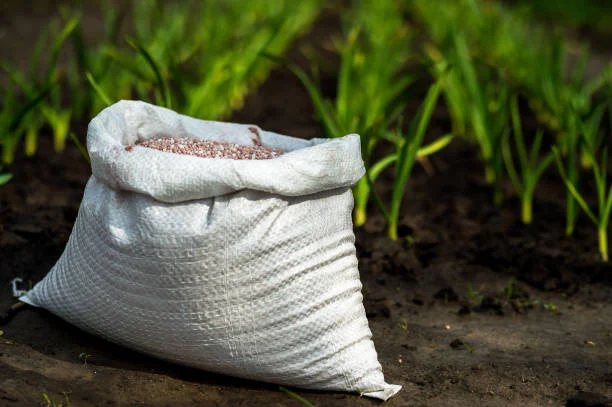
Potassium is the nutrient crops take up in the largest quantity after nitrogen, and there are three practical ways to buy it. They differ substantially in price — and the cheapest is frequently the wrong choice for high-value horticulture.
What separates them is not the potassium. It is everything else in the bag.
The three products
| MOP (muriate of potash) | SOP (sulphate of potash) | Potassium nitrate | |
|---|---|---|---|
| Formula | KCl | K₂SO₄ | KNO₃ |
| Grade | 0-0-60 | 0-0-50 | 13-0-46 |
| Also supplies | Chloride | Sulphur (≈18% S) | Nitrate nitrogen (13% N) |
| Chloride content | ~47% | Under 1.5% | Very low |
| Salt index | High | Moderate | Moderate |
| Solubility (20 °C) | ~340 g/L | ~111 g/L | ~316 g/L |
| Relative cost per unit K | Lowest | Moderate | Highest |
Muriate of potash (MOP)
MOP accounts for the large majority of world potash consumption, for a straightforward reason: it is the cheapest source of potassium available and it carries the highest potassium concentration.
It also supplies roughly 47% chloride. For broadacre crops on soils with adequate leaching — cereals, maize, soybean, sugar beet — that chloride is usually harmless and occasionally beneficial, since chloride is itself a required micronutrient.
Where it becomes a problem:
- Chloride-sensitive crops: table grapes, avocado, citrus, tobacco, strawberry, potato (where it affects processing quality), most ornamentals
- Saline soils or saline irrigation water, where the additional salt load compounds an existing problem
- Protected cropping with limited leaching, where chloride accumulates in the root zone
- Any fertigation system where the total EC budget is already tight
MOP also has the highest salt index of the three, which matters where salinity is a constraint.
Sulphate of potash (SOP)
SOP supplies potassium with essentially no chloride, plus around 18% sulphur. It sits in the middle on price and is the standard choice where chloride is a concern but nitrate nitrogen is not wanted.
Where it fits:
- Chloride-sensitive crops on saline or marginal water
- Situations where the crop also needs sulphur — increasingly common, as atmospheric sulphur deposition has fallen sharply across Europe and North America over recent decades
- Late-season potassium applications where extra nitrogen would delay maturity or reduce quality
The practical catch: its solubility is around a third of the other two. It dissolves perfectly well, but it needs more water, more agitation and more time. Plan for that in mixing, particularly in cold conditions or with high-volume stock tanks.
Potassium nitrate
Potassium nitrate is the most expensive per unit of potassium and the standard in high-value irrigated horticulture. It supplies chloride-free potassium plus nitrate nitrogen, and it dissolves quickly and cleanly.
What you are paying for:
- Nitrate nitrogen — the form crops take up directly, which also supports calcium and magnesium uptake rather than competing with them the way ammonium does
- High solubility with essentially no insoluble residue — important in drip systems
- No chloride, low sodium
- No soil acidification
Its one limitation is that the nitrogen comes whether you want it or not. Late in the season, or at points where vegetative growth needs to slow, that nitrogen can work against you. This is where SOP or MKP becomes the better tool.
How to choose
Question 1: Is the crop chloride-sensitive?
If yes, MOP is out regardless of price. Chloride damage in a perennial crop is expensive and slow to reverse.
Question 2: What does your water analysis show?
If chloride, sodium or EC are already high, you have limited headroom. Adding a high-chloride, high-salt-index fertilizer to water that is already marginal is a poor decision even for a tolerant crop. Get a full water analysis before deciding.
Question 3: Does the crop need nitrogen at this point?
During fruit fill, usually yes — potassium nitrate covers both. Late season or where vegetative vigour is already excessive, usually no — SOP or MKP is better.
Question 4: Does the crop need sulphur?
If a tissue analysis shows sulphur is marginal, SOP covers two requirements in one product. Alternatively magnesium sulphate supplies sulphur alongside magnesium.
Question 5: Are you fertigating or broadcasting?
For fertigation, solubility and residue matter. Potassium nitrate dissolves fastest; SOP needs more time; agricultural-grade MOP is generally unsuitable for drip systems.
A worked comparison
Table grape grower, saline groundwater, drip irrigated. Chloride-sensitive crop plus existing salinity rules MOP out immediately. During fruit development, potassium nitrate supplies potassium and useful nitrate. Approaching harvest, switching to SOP maintains potassium without adding nitrogen that would soften fruit.
Maize grower, broadacre, good rainfall, non-saline soil. MOP is the correct answer. The crop tolerates chloride, leaching removes it, and there is no reason to pay two to three times more per unit of potassium for a benefit that does not apply.
Protected tomato, recirculating fertigation. Potassium nitrate for the main programme, with MKP at flowering to add potassium and phosphorus without nitrogen. MOP would be a mistake in a system where salts accumulate.
Common errors
- Comparing on bag price. 0-0-60 and 0-0-50 are not the same product. Compare cost per kilogram of K₂O, then account for what else the bag supplies.
- Ignoring the nitrogen credit. Potassium nitrate looks expensive until you subtract the value of the nitrogen it replaces.
- Assuming SOP dissolves like KNO₃. It does not. Under-agitated SOP settles in the tank and dosing becomes uneven.
- Using MOP in a drip system. Even where the crop tolerates chloride, agricultural-grade MOP is usually not soluble enough for drip.
- Forgetting potassium competes with magnesium and calcium. Heavy potassium can induce magnesium deficiency. Watch older leaves — see the deficiency guide.
Summary
MOP is cheapest and right for tolerant broadacre crops on non-saline ground. SOP gives chloride-free potassium plus sulphur at moderate cost, with slower dissolution. Potassium nitrate costs most and is the standard for high-value irrigated horticulture, particularly during fruit fill.
Send us your crop, water analysis and growth stage on WhatsApp and we will tell you which source fits — including when the cheaper product is the right call.
Need this product, or advice on which grade fits?
Send us the crop, your water analysis and the quantity you need. We will reply with the options that actually apply to your situation.



1 comment