NPK 20-20-20 + TE is a balanced, fully water-soluble fertilizer containing 20% nitrogen, 20% phosphate (P₂O₅), 20% potash (K₂O) and a package of chelated trace elements. It is the general-purpose tool of fertigation: one product that covers a crop’s main needs during vegetative growth. This guide covers what it is for, its advantages and how to use it through irrigation and as a foliar feed.
What NPK 20-20-20 is for
Its purpose is to feed actively growing plants through water. Because it dissolves completely, it can be delivered through drip, sprinkler and hydroponic systems, or sprayed onto leaves. Typical uses:
- Early vegetative growth in protected vegetables (tomato, pepper, cucumber)
- Nursery stock, seedlings and transplants
- Ornamentals, cut flowers and pot plants
- Soft fruit and turf
- Foliar feeding to correct a short-term shortfall
- Operations with limited dosing equipment, where one product must do several jobs
Advantages of NPK 20-20-20 + TE
Fully soluble with low residue
Insoluble residue is the hidden cost of cheap soluble fertilizers. It builds up in filters and emitters, causes uneven delivery and eventually means cleaning or replacing equipment. A low-residue product protects your irrigation system.
Balanced nutrition in one product
Equal N, P and K simplify dosing. For many growers, one well-run product beats a complex programme run approximately.
Trace elements included
Chelated iron, manganese, zinc, copper, boron and molybdenum help prevent the micronutrient deficiencies that commonly appear in soilless and intensively fertigated crops.
Fast response
Nutrients are delivered in solution directly to the root zone or leaf, so the crop responds quickly.
Works as a foliar feed
At lower concentrations, the same product can be sprayed to supplement root feeding during stress periods.
How to use NPK 20-20-20
1. Analyse your irrigation water
Water already contains calcium, magnesium, bicarbonate and sometimes sodium and chloride. Knowing what is there prevents overdosing and precipitation. Our fertigation guide walks through this step by step.
2. Dissolve completely before injection
Add the fertilizer to the tank with the agitator running and wait until it has fully dissolved. Never pour undissolved product into the injection line.
3. Keep it apart from concentrated calcium
20-20-20 contains phosphate. Concentrated phosphate and concentrated calcium form insoluble calcium phosphate, which blocks drippers. Run calcium nitrate from a separate stock tank (the A/B tank system) and let them meet only at final dilution. Read preventing dripper blockages for details.
4. Dose by EC
Set the injection rate to achieve the target electrical conductivity (EC) for your crop and stage, and monitor drainage EC and pH regularly. Start conservatively with young plants and increase as the crop grows.
5. For foliar feeding
Use a low concentration (commonly 0.2–0.5%, depending on crop), spray early in the morning or in the evening, avoid hot sun, and test on a small area before treating the whole crop.
6. Change grade as the crop moves into fruiting
Once fruit sets, potassium demand rises sharply and nitrogen should taper. Switch to NPK 11-8-34 + TE and keep calcium running alongside. Our article on calcium in crops explains why.
Storage
Soluble fertilizers absorb moisture. Keep bags sealed and dry, and use opened bags quickly.
Buying NPK 20-20-20
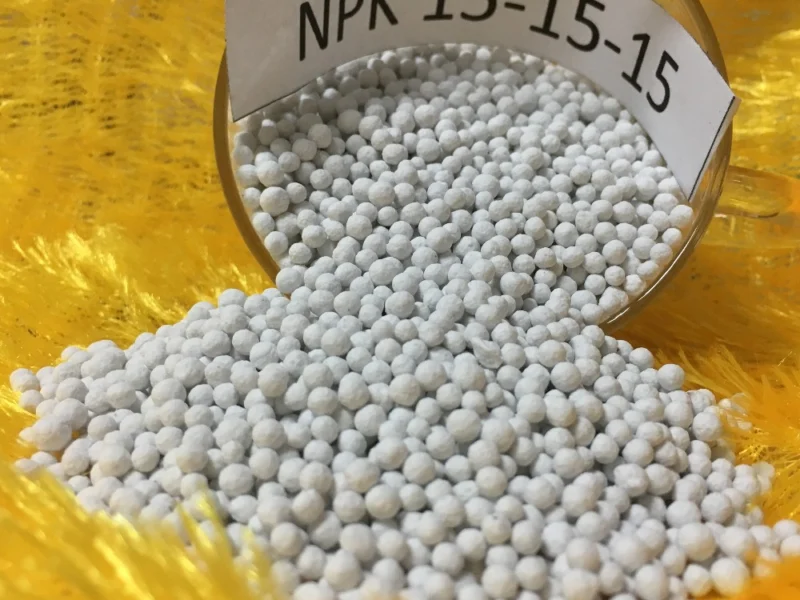
Ask for the guaranteed analysis, the insoluble matter figure and the trace element forms. For granular soil application rather than fertigation, NPK 15-15-15 is usually the more economical choice. Request a quotation from NutriFer Agro.
Need this product, or advice on which grade fits?
Send us the crop, your water analysis and the quantity you need. We will reply with the options that actually apply to your situation.